Fertility · Assisted reproduction

IVF & ICSI

Assisted reproduction with andrology depth most IVF centres don’t have.

IVF & ICSI care at Ankur Healthcare

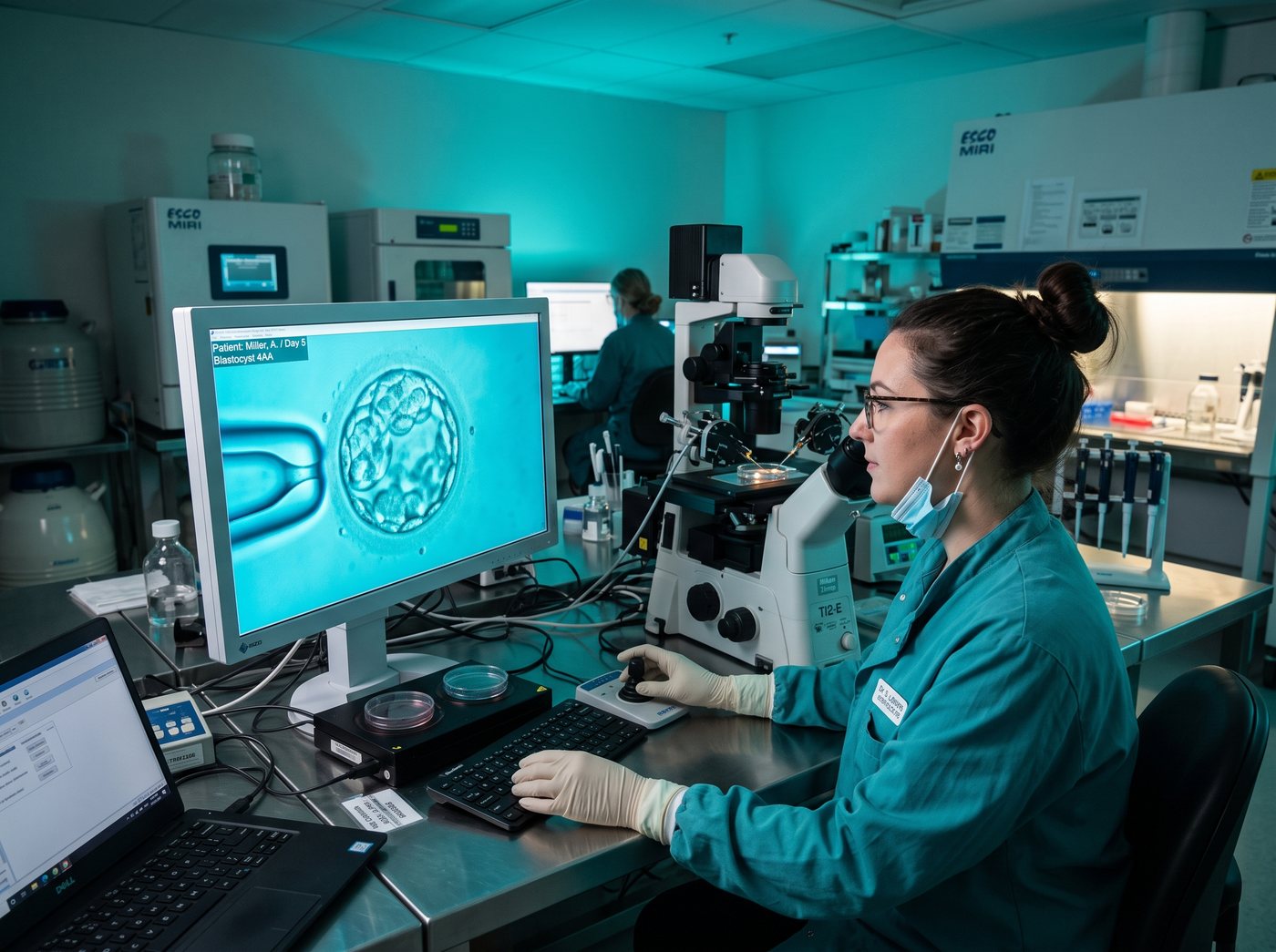
IVF (in-vitro fertilisation) joins egg and sperm in the laboratory; ICSI injects a single selected sperm directly into the egg — the standard approach when the male factor is significant. Ankur’s difference is the andrology foundation: because we diagnose and treat the male side properly, couples reach IVF only when it is truly the right path — and arrive at it with the best possible sperm.

Diagnosis at Ankur

A joint work-up of both partners: ovarian reserve and uterine assessment for her; complete andrological evaluation for him. You receive a clear recommendation — and if a simpler treatment (or surgery that restores natural fertility) is right, we say so.

Treatment options

Conventional IVF

Controlled ovarian stimulation, egg retrieval, laboratory fertilisation and embryo transfer.

ICSI

Single-sperm injection for male-factor cases, including sperm retrieved surgically via TESA/micro-TESE.

Embryo freezing & planned transfer

Freezing quality embryos for transfer in the healthiest possible cycle.

Genetic counselling & testing

Where indicated by history or repeated failure, with transparent counselling first.

Frequently asked questions

What are our chances of success?
Success depends on age, egg and sperm quality, and the underlying cause. We share realistic, personalised numbers — never inflated averages.
Is ICSI always better than IVF?
No. ICSI is invaluable in male-factor cases; where it adds nothing, we don’t add it.
How many cycles will we need?
Many couples succeed within one to three cycles. We plan and price transparently so you can decide with clear eyes.
Is the process painful?
Injections are manageable and egg retrieval is done under anaesthesia. Our team supports you at every step.
A simpler first step

IUI — intrauterine insemination

IUI places prepared, concentrated sperm directly into the uterus around ovulation, shortening the journey to the egg. It is simpler and far less expensive than IVF — appropriate for mild male-factor issues, unexplained infertility, and specific situations like donor sperm use. The honest caveat: IUI only works when the biology suits it, and we tell you plainly whether yours does.

Diagnosis at Ankur

Confirmation that tubes are open, ovulation can be achieved, and the processed sperm count crosses the threshold where IUI has a fair chance. Without those, IUI wastes months — we won’t recommend it.

Treatment options

Natural-cycle or stimulated IUI

With careful monitoring and ovulation timing.

Laboratory sperm preparation

Washing and concentrating the most motile sperm for insemination.

Defined-attempt planning

A clear plan (usually 3–4 well-done cycles) with pre-agreed next steps if unsuccessful.

Frequently asked questions

How successful is IUI?
Typically 10–18% per well-selected cycle. Cumulative chances over 3–4 cycles are what matter.
Is IUI painful?
It feels like a routine internal examination and takes minutes — no anaesthesia needed.
When should we move to IVF?
If well-executed IUI cycles fail, or if your work-up shows IUI never had a fair chance.
Can IUI help with low sperm counts?
Mildly low counts, yes. Significantly low counts do better with ICSI.

Ready when you are.

One confidential conversation. That’s the whole first step.

✆
Book a Confidential Consultation WhatsApp the Care Team