
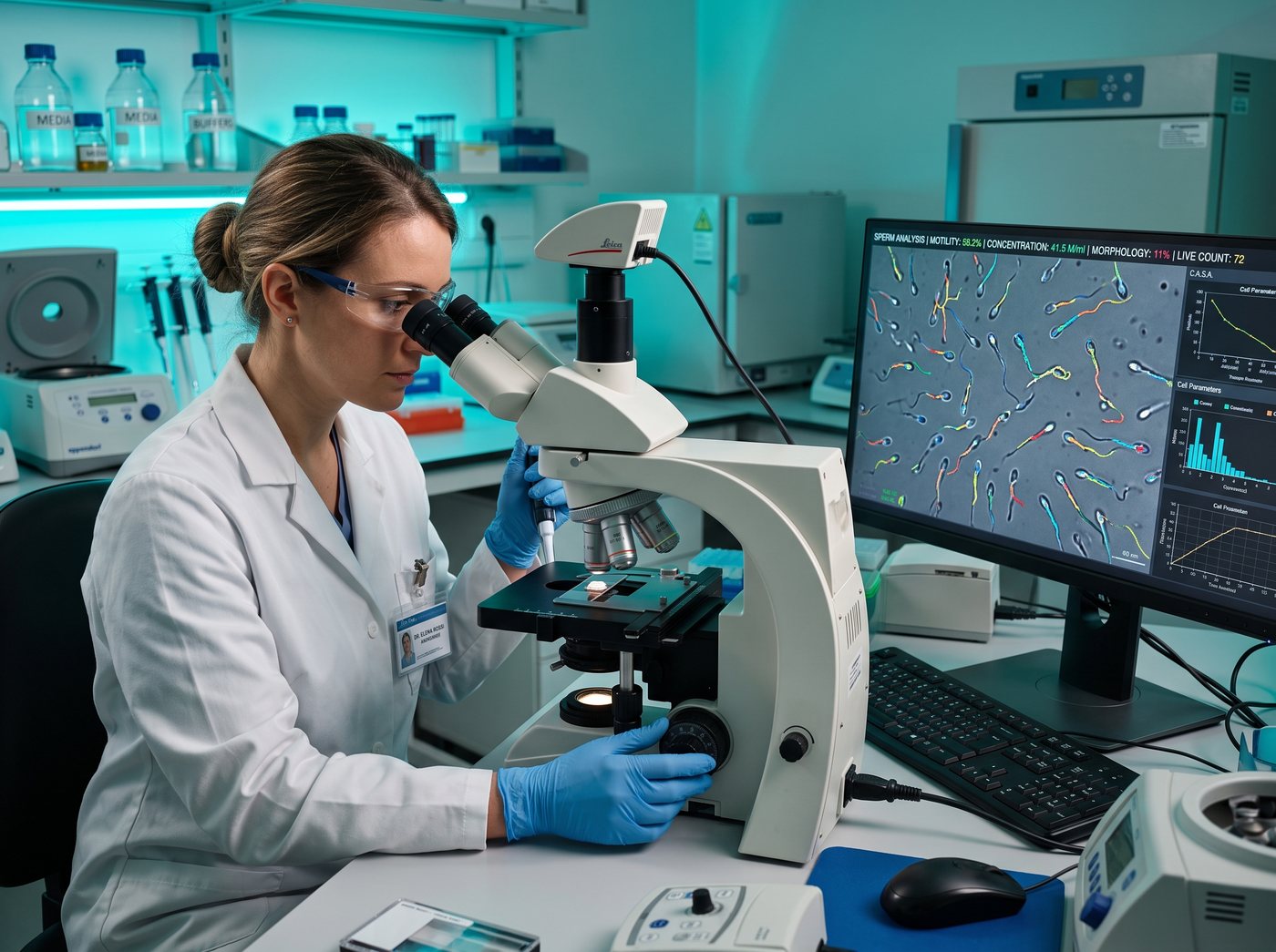
When a couple struggles to conceive, the male factor contributes in roughly half of cases — yet men are often the last to be tested. Ankur was built around this gap. From semen analysis to microsurgical sperm retrieval, we diagnose precisely and treat what can be treated, so couples don’t jump to IVF before understanding why.
When to seek help
- No pregnancy after 12 months of regular unprotected sex
- Low count, poor motility or abnormal forms on semen analysis
- Azoospermia — no sperm in the ejaculate
- History of varicocele, infection, surgery or undescended testis
Common causes
- Varicocele — enlarged veins around the testis (very common and correctable)
- Obstruction of the sperm pathway
- Hormonal imbalance affecting sperm production
- Genetic factors, infections, heat/toxin exposure, lifestyle
Diagnosis at Ankur
Proper semen analysis in our andrology lab (done right, repeated when needed), hormone profile, scrotal ultrasound and genetic tests where indicated. For azoospermia, we determine whether the cause is obstruction or production — the treatments are completely different.
Treatment options
Low sperm count (oligospermia)
Graded by severity and worked up for a cause, rather than treated as one single condition.
Hormonal causes
Testosterone, FSH, LH, prolactin and thyroid assessed where the counts or history point that way — endocrine problems are among the more treatable causes.
Genetic causes
Karyotype and Y-chromosome microdeletion testing when indicated, with counselling on what a result means for you both.
Recurrent IVF failure — male factor
When cycles keep failing, the male side is re-examined properly: DNA fragmentation, oxidative stress and sperm function.
Sperm retrieval (TESE / TESA / MESA)
Surgical retrieval for azoospermia, matched to the type and cause, in theatre alongside the IVF cycle.
Medical & lifestyle treatment
Correcting hormones, infections and lifestyle factors that suppress sperm production.
Varicocele surgery (microsurgical)
Precision repair that can improve counts and motility in appropriately selected men.
Surgical sperm retrieval — TESA / micro-TESE
Retrieving sperm directly from the testis, even in many azoospermic men, for use with ICSI.
Reconstructive surgery
Re-opening blocked pathways (e.g., vaso-epididymal anastomosis) in obstructive azoospermia.
Andrology-led IVF/ICSI pathway
When assisted reproduction is the right answer, the male work-up travels with you into our fertility programme.