
Advanced andrology diagnostics
A routine semen analysis answers a narrow question. When the answer does not fit the couple in front of us, we look further — at DNA integrity, oxidative stress and sperm function, not just count and motility.
The principle
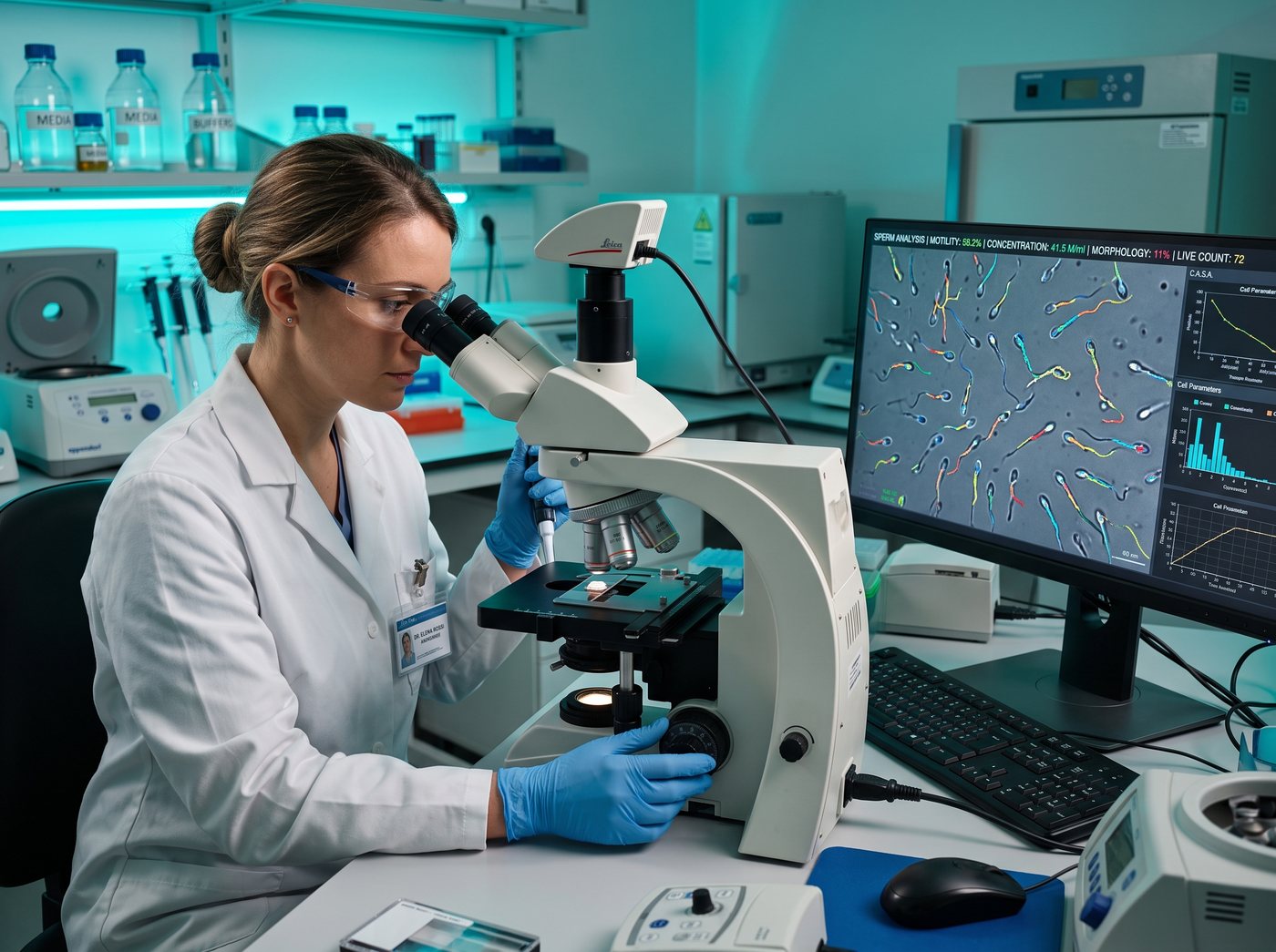
Comprehensive andrology diagnosis means understanding the patient and the sperm beyond the conventional parameters, when the clinical picture calls for it. Two men can have identical semen reports and entirely different problems.
That is the difference between owning a laboratory and having a diagnostic philosophy. The approach here comes out of published laboratory work — flow-cytometric assessment of sperm DNA fragmentation, specialised sperm transport media, non-cryogenic transport systems, and research into point-of-care and home-based semen assessment.
Why it changes decisions
Treatment chosen on an incomplete diagnosis is a guess with a bill attached. Establishing the underlying problem first is what makes it possible to say “you do not need this procedure” — and to mean it.
The investigations
Not everyone needs all of these. Which apply depends on the history, the examination and what the first results show.
Semen and sperm function
- Comprehensive semen analysis to WHO 6th edition criteria
- Sperm DNA fragmentation testing
- Flow-cytometry-based DNA fragmentation assessment
- Reactive oxygen species (ROS)
- Acrosin assessment
- Annexin V and sperm apoptosis assessment
- Advanced sperm functional assessment
Clinical and imaging
- Hormonal evaluation relevant to male infertility
- Genetic evaluation — karyotype and Y-chromosome microdeletion
- Scrotal and testicular imaging, including Doppler where indicated
- Specialised investigations for selected male infertility conditions
Specialised andrology testing, including DNA fragmentation index and ROS, is handled through a centralised laboratory model.
Where each test is performed
Which of the above are performed within the Ankur network and which are referred to an external laboratory is being confirmed against the current service list, and will be stated test by test rather than assumed. Ask at the consultation in the meantime.
Frequently asked questions
How do I prepare for a semen analysis?
My sperm count is low — what happens next?
What is sperm DNA fragmentation?
Can I give the sample at home?
Start with the diagnosis.
All costs are explained transparently during consultation and provided in writing before treatment is undertaken.