Women’s health · Care without awkwardness

Women’s Health

Fertility assessment, PCOS management and discreet aesthetic gynaecology — the same evidence-first Ankur care, for her.

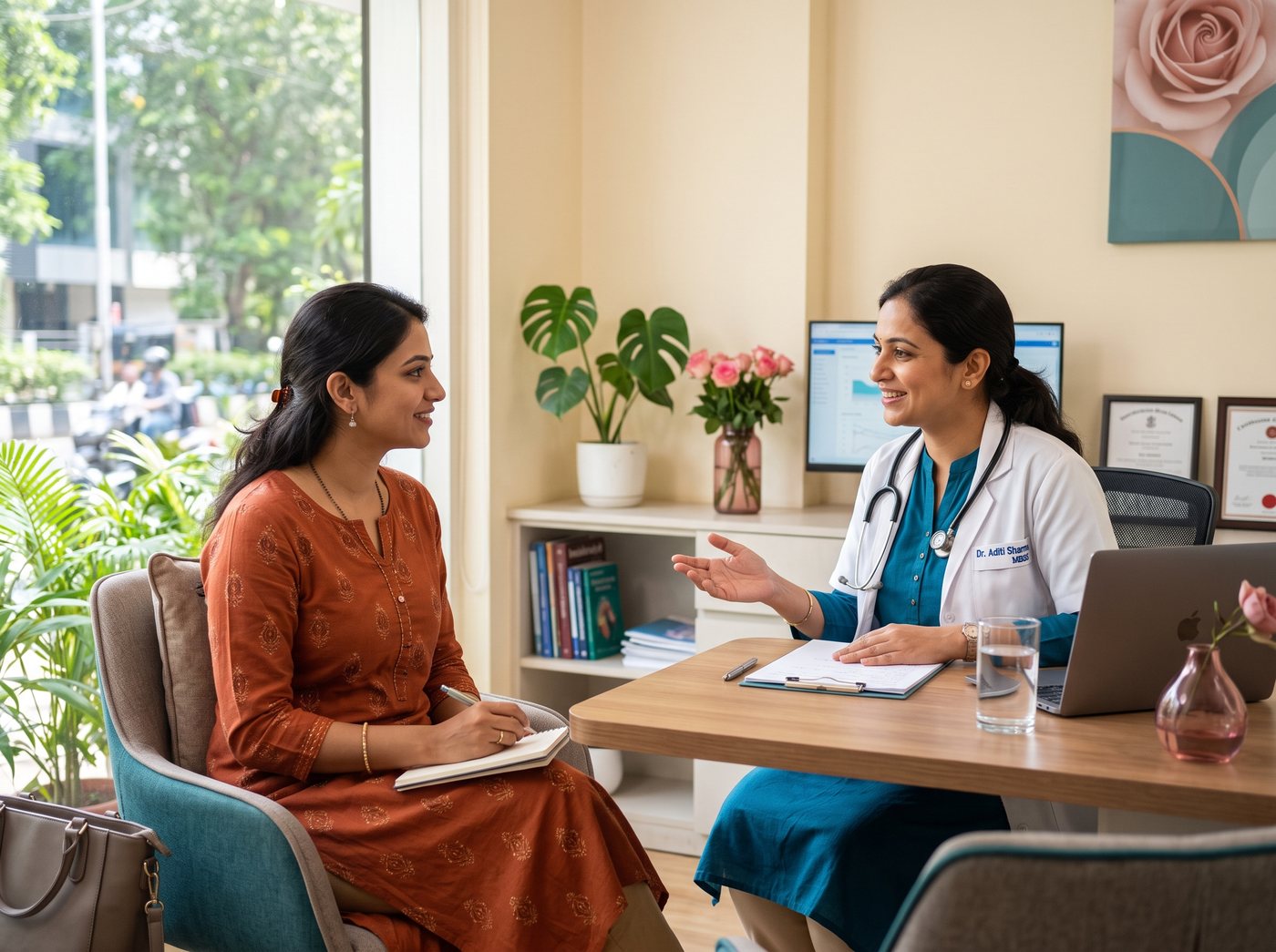
Woman consulting a doctor — women's health at Ankur
Where you actually stand

Fertility assessment

Whether you’re trying to conceive, planning ahead, or worried after months of disappointment, a structured fertility assessment replaces anxiety with information: how your ovarian reserve looks, whether you’re ovulating, whether your tubes and uterus are ready — and what your realistic options are.

When to seek help

  • No pregnancy after 12 months of trying (6 months if over 35)
  • Irregular or absent periods
  • Known PCOS, endometriosis or thyroid conditions
  • Planning pregnancy later and wanting a baseline

Diagnosis at Ankur

Cycle mapping, hormonal profile (including AMH for ovarian reserve), pelvic ultrasound with antral follicle count, and tubal evaluation where indicated — interpreted together, with your partner’s semen analysis alongside. Fertility is a couple’s question; we assess it that way.

Treatment options

Ovulation support

Correcting thyroid/prolactin issues and inducing ovulation where cycles are irregular.

Timed guidance & IUI

Structured natural attempts or IUI when the work-up supports it.

Surgical referral pathways

For fibroids, polyps or tubal issues that need correction first.

IVF/ICSI pathway

When assisted reproduction is the right answer, seamlessly within Ankur.

Frequently asked questions

What is AMH?
A blood marker of ovarian reserve — how many eggs remain. It guides urgency and treatment choice, not your worth.
Is the assessment painful?
Bloods and ultrasound are routine; tubal tests cause short cramping at most.
My periods are regular — can I still have a problem?
Regular cycles are reassuring but don’t rule out tubal, uterine or male-factor issues.
How soon do we get answers?
Most of the picture is ready within one cycle (about 4 weeks).
Cycles, hormones, metabolism

PCOS & hormonal health

Polycystic ovary syndrome affects roughly one in ten women: irregular cycles, acne, unwanted hair growth, weight struggles and, often, fertility difficulty. PCOS is not your fault and not a life sentence — it is a metabolic-hormonal pattern that responds well to informed, sustained management.

When to seek help

  • Irregular, infrequent or absent periods
  • Acne, oily skin, excess facial/body hair
  • Weight gain that resists effort, especially around the waist
  • Difficulty conceiving; mood changes

Common causes

  • Insulin resistance driving hormonal imbalance
  • Excess androgen (male-pattern hormone) activity
  • Genetic predisposition, amplified by lifestyle

Diagnosis at Ankur

Clinical history, examination, hormone profile and ultrasound — applying proper criteria so that normal young ovaries aren’t mislabelled as PCOS (a distressingly common error).

Treatment options

Lifestyle-first management

Realistic nutrition and activity planning — 5–10% weight change can restore cycles.

Cycle & symptom regulation

Medical options for periods, acne and hair growth, tailored to whether pregnancy is the current goal.

Fertility treatment in PCOS

Ovulation induction with careful monitoring; IUI/IVF when needed.

Metabolic protection

Screening and managing sugar, lipids and blood pressure — PCOS care is long-term health care.

Frequently asked questions

Can PCOS be cured?
It’s managed rather than cured — and managed well, most women get the cycles, skin and pregnancies they want.
Will I definitely struggle to conceive?
No. Many women with PCOS conceive naturally; those who need help usually respond well to ovulation induction.
Do I need to lose a lot of weight?
Even modest, sustainable loss meaningfully improves hormones and ovulation.
Is PCOS the same as ovarian cysts?
No — the 'cysts’ are small resting follicles, not tumours, and the name is misleading.
Perimenopause & after

Female sexual health & menopause

Menopause is not an illness, and it is not something to simply endure. The years around it change sleep, mood, bones, the heart and — the part least often raised in a consulting room — sexual comfort and desire. All of it is assessable, and most of it is treatable.

When to seek help

  • Cycles becoming irregular, heavier or lighter in your forties
  • Hot flushes, night sweats, disturbed sleep
  • Vaginal dryness, burning, or pain with intercourse
  • Recurrent urinary symptoms or urgency
  • Low desire, low mood, or difficulty with arousal
  • Concern about bone or heart health after menopause

Common causes

  • Falling oestrogen thinning vaginal and urinary tissue (genitourinary syndrome of menopause)
  • Hormonal shift affecting sleep, temperature regulation and mood
  • Accelerated bone loss in the early postmenopausal years
  • Desire and arousal changes — hormonal, physical and relational together

Diagnosis at Ankur

History, examination and — where it changes the decision — hormone, bone and metabolic assessment. Sexual symptoms are asked about directly rather than left for you to raise, because most women are never asked at all.

Treatment options

Menopause & perimenopause care

Symptom management planned with you, including hormone therapy where it is appropriate, with a clear account of benefit against risk for your own history.

Vaginal dryness & atrophy

Local treatment for dryness, burning and pain with intercourse — often the single change that restores comfort.

Genitourinary menopausal health

Urinary urgency, recurrent infections and bladder symptoms treated as part of the same hormonal picture, not separately.

Female sexual dysfunction

Desire, arousal, orgasm and pain assessed properly, with your partner welcome in the conversation.

Vulval & vaginal care

Skin conditions, irritation and recurrent discomfort that are frequently dismissed elsewhere.

Pelvic floor health

Assessment and guided rehabilitation for laxity, prolapse symptoms and leakage.

Holistic women’s health programmes

Bone, heart and metabolic protection managed over months, with AnkurURJA where longer follow-up suits you better.

Frequently asked questions

Is hormone therapy safe?
For most healthy women starting within about ten years of menopause, the balance favours benefit — but it depends on your own history, and that is what the consultation is for. It is a decision to make with a doctor, not from a headline.
I only have dryness and pain. Do I need hormones?
Often not. Local treatment applied where the problem is will settle most cases without systemic therapy.
Is it too late if I went through menopause years ago?
No. Vaginal, urinary, bone and sexual symptoms all remain treatable long afterwards.
Will I have to discuss sex?
Only as much as you want to. You can raise it at a later visit, or in writing beforehand — but we will ask, because no one else does.

Not sure where to start?

Tell us what’s on your mind — we’ll point you to the right specialist.

AnkurURJA

Assessment-led care sits with AnkurURJA

Assessment, hormonal and wellness care, preventive diagnostics and follow-up over time are handled by AnkurURJA, our consultation practice. Anything requiring a procedure, theatre or reproductive medicine stays here at AnkurHEALTH. One record covers both, so a referral either way needs no repeat work-up. See AnkurURJA care

✆
Book a Confidential Consultation WhatsApp the Care Team